Q1. What language is used during the program?
The program is conducted primarily in English to accommodate international startups.
Interpretation may be provided when needed, particularly for meetings with Korean corporates, partners, or stakeholders.
Q2. Can early-stage or pre-startup teams apply?
Early-stage startups and pre-startup teams are welcome to apply. However, this program is designed for startups that are ready to explore or expand into the Korean market.
During evaluation, preference may be given to startups that demonstrate:
- A working product, prototype, or MVP
- Existing users, customers, or revenue
- Market validation in another country
- A clear strategy for entering the Korean market
Companies do not need to be formally incorporated at the time of application.
Q3. Are travel or accommodation expenses covered?
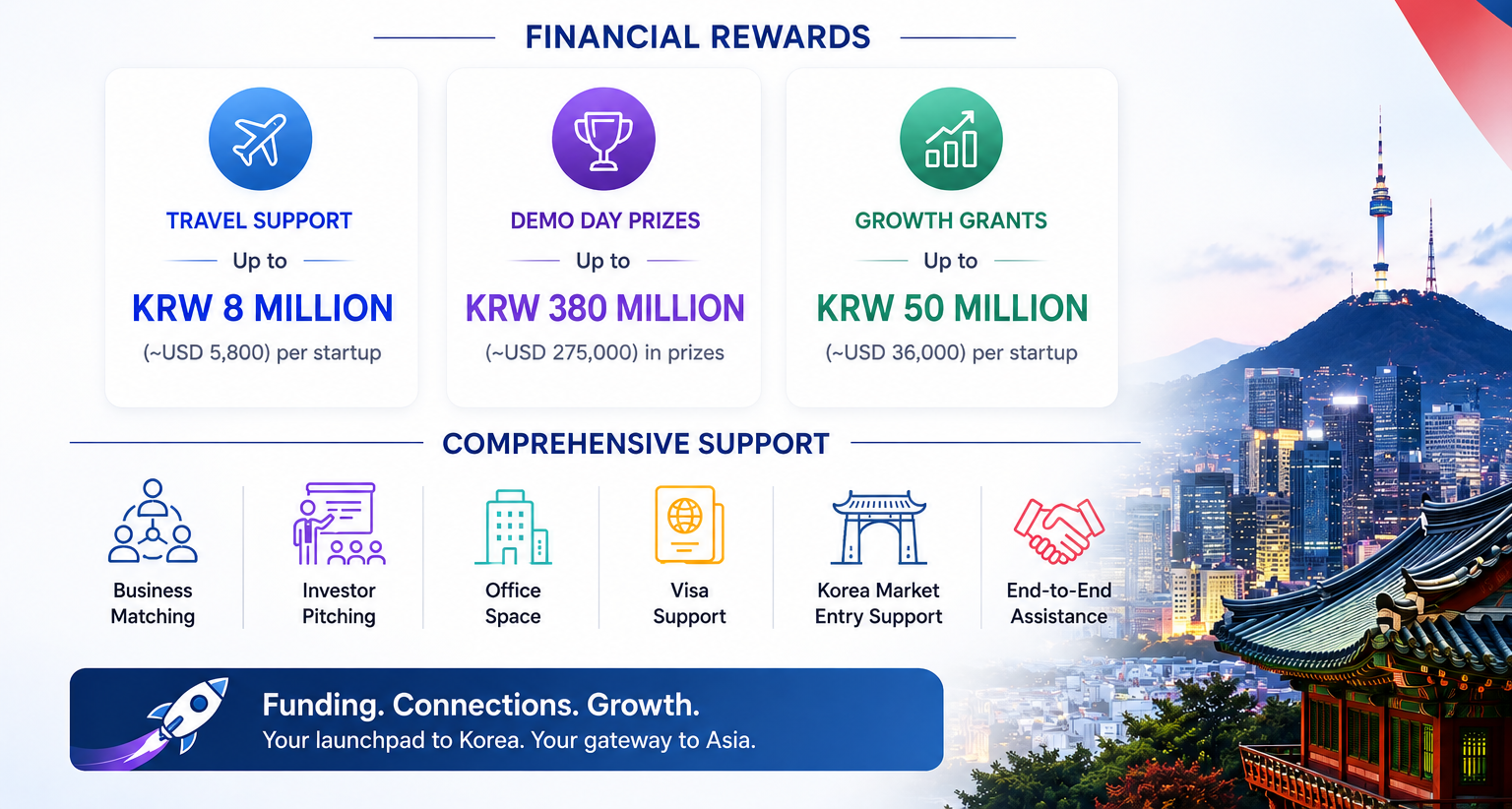
Support may be provided for certain activities, particularly during major events or designated core program periods.
Details regarding travel or accommodation support may vary each year and will be communicated to selected teams in advance.
Q4. Can Korean nationals apply?
The program is designed to support foreign entrepreneurs entering the Korean market.
The representative founder (CEO) must hold non-Korean citizenship at the time of application.
Startups with international teams may still apply as long as the representative founder is a foreign national.
Q5. Do I need to establish a company in Korea before applying?
No.
You do not need a Korean legal entity at the time of application.
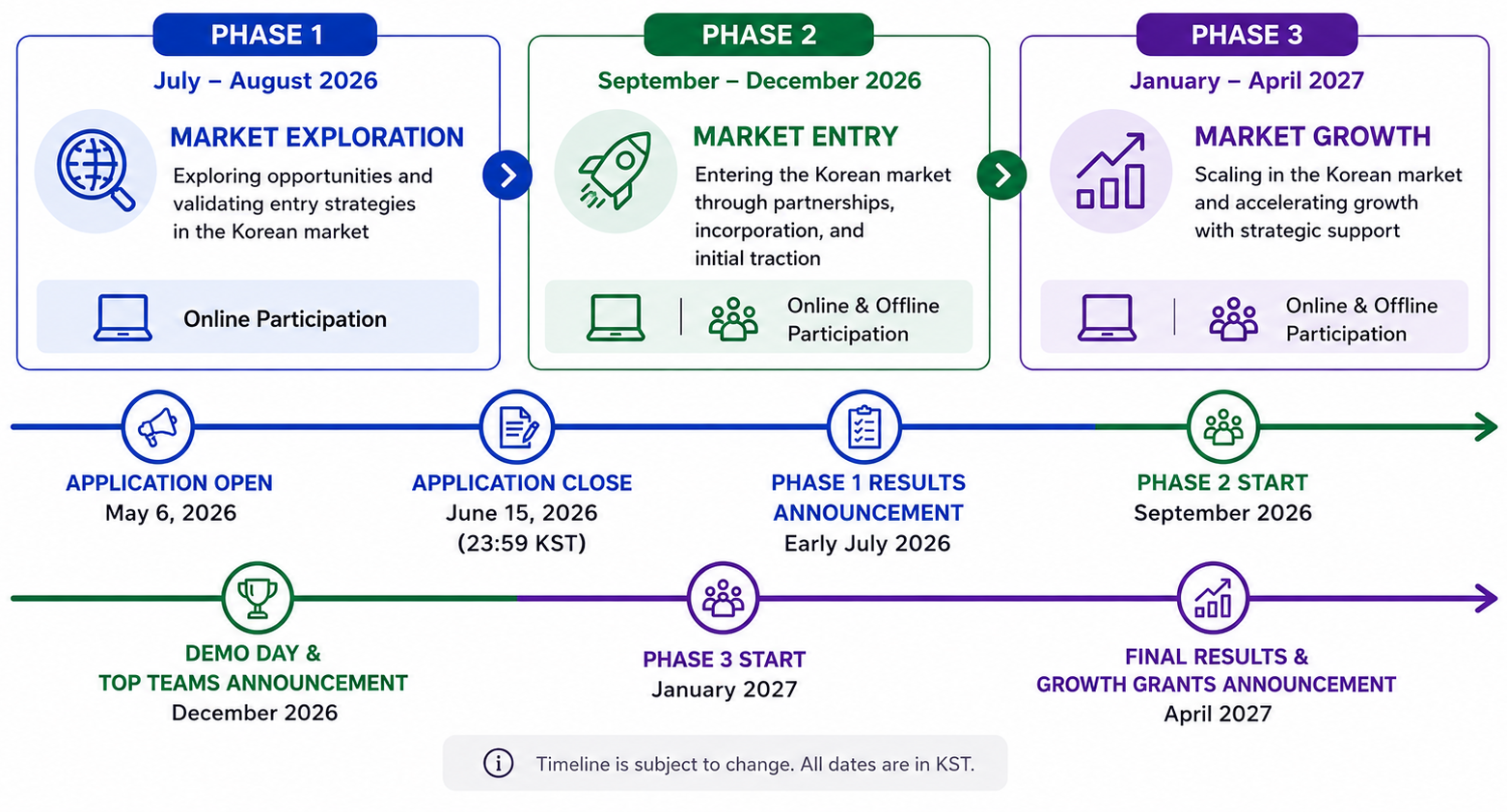
However, selected startups may be required to establish a Korean entity during the program (typically during Phase 1 or Phase 2) in order to conduct local business activities and access certain program benefits.
In particular, establishing a Korean entity may be necessary to receive financial awards or other program incentives.
The program provides guidance and connects startups with legal and accounting professionals who can assist with company incorporation in Korea.
Q6. Do founders need to relocate to Korea?
The program is designed as a hybrid program, combining online and in-person activities.
Relocation is not strictly required, but some key events require in-person participation.
To make participation easier for international startups, major activities are grouped into “Core Weeks”, typically about two weeks per month, when key meetings, events, and networking opportunities take place.
Being physically present in Korea can significantly increase opportunities to connect with corporates, investors, and ecosystem partners.
Q7. Can more than two team members participate in the program?
Yes. Startups may involve additional team members depending on the program phase or specific activities.
However, certain benefits—such as visa support or travel assistance—may be limited to a specified number of participants per startup.
Q8. Will the program help with visas?
Yes.
The program provides guidance on startup visa options, including the D-8-4 Startup Visa, depending on eligibility.
Visa recommendation letters may be issued for up to three team members per startup to support their participation in the program and business activities in Korea.
Participants will also receive guidance on visa requirements and application procedures.
Q9. Can startups join the program while participating in other acceleration programs?
Yes.
Startups may participate in other programs simultaneously, provided there are no conflicts with the schedule or commitments.
Teams are expected to remain actively engaged in activities throughout the program.